
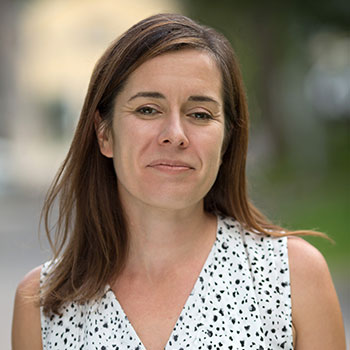
Jennifer Baltzer
Canada Research Chair in Forests and Global Change, Wilfrid Laurier UniversityPresentation: Northern Canada – regional issues and Global Water Futures’ scientific response
Presentation Abstract
Jennifer Baltzer1 and Heidi Swanson2 on behalf of the NWF team
1Department of Biology, Wilfrid Laurier University, Waterloo, ON
2Department of Biology, University of Waterloo, Waterloo, ON
Canada’s north is among the most rapidly warming regions on Earth. The scale and rapidity of recently observed warming-induced changes throughout this region indicate that it is capable of rapid responses to perturbations. Unprecedented changes in snow cover and rates of permafrost thaw are transforming ecosystems (e.g. conversion of forests to wetlands; lakes to thaw lake basins; tundra to shrub vegetation), and changing the distribution and routing of water over the landscape, which confounds the prediction of eco-hydrological responses to combined warming and changes in precipitation regimes. Change or intensification of geomorphic and hydrologic processes have altered flow and sediment regimes and aquatic health of streams, rivers, and lakes, including key waterways used for hydropower, water supply, and transportation. These changes directly affect the health, well-being, safety and livelihoods of northern communities. Resource exploration and production is expected to expand dramatically in the north in the coming years, which will include construction of new highways, pipelines and other infrastructure. Combined with the legacies of past development activities, the security of water resources is of paramount concern. Government and industry decision makers, and local and Aboriginal communities and co-management boards urgently require science-based predictive tools and user-driven mitigation and adaptation strategies. In direct response to these water security challenges, Global Water Futures is supporting Northern Water Futures (NWF), a NWT-focused consortium of knowledge producers, mobilisers and users from university, communities, government, industry and non-governmental organisations. Together, we are working collaboratively to improve the understanding of, and ability to predict and mitigate, the impacts of climate change and industrial expansion on the NWT shared water resources. In this talk, we will review key water resource-related issues in the Northwest Territories and the NWF project.
Biography
Professor Jennifer Baltzer is a Canada Research Chair in Forests and Global Change. Dr. Baltzer is a forest ecologist whose work focuses on the drivers of the composition, structure and function of forests from the tropics to the subarctic and responses of these systems to global change. Dr. Baltzer has an extensive boreal forest field research program throughout the Northwest Territories, which focuses on the impacts of climate-driven disturbances including permafrost thaw and wildfire on subarctic ecosystems. Dr. Baltzer was recently inducted into the Royal Society of Canada’s College of New Scholars, Artists and Scientists.